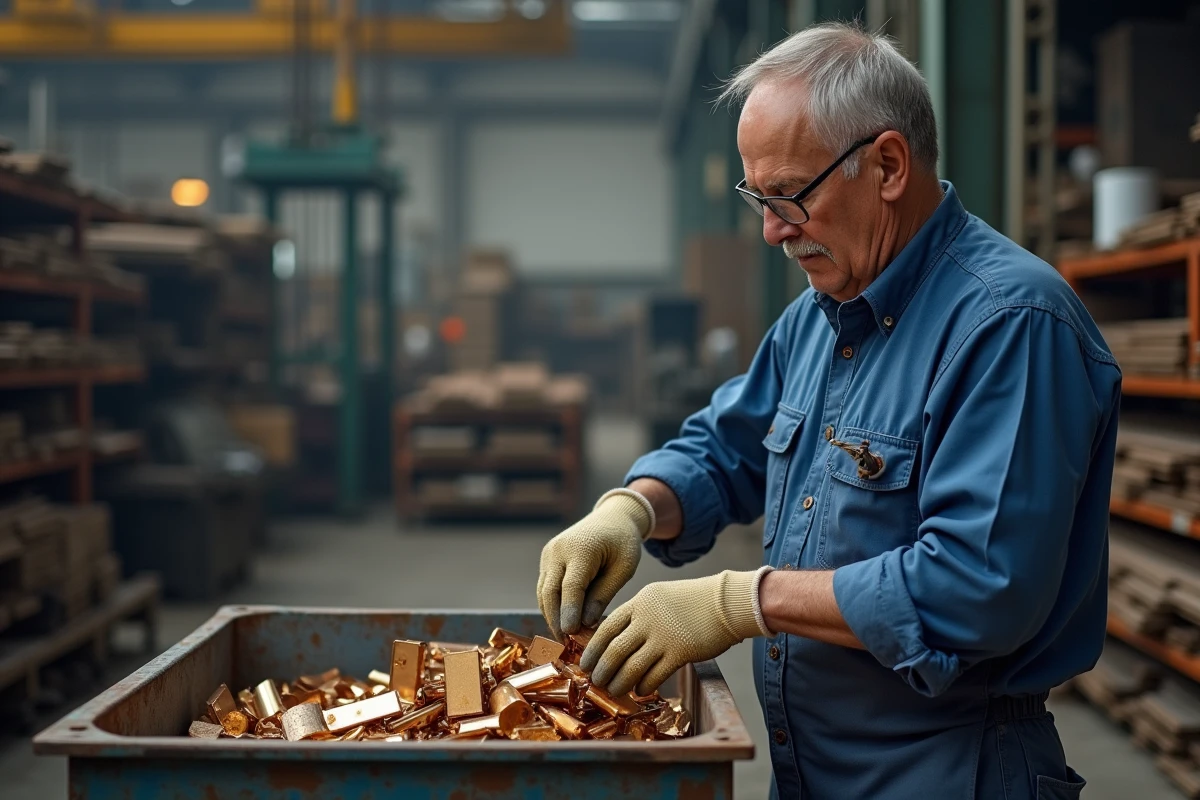
Since January 2024, the pricing of bronze has followed a trajectory distinct from that of copper, its main component, while global stockpiles are at historically low levels. Some recyclers are now imposing variable discounts based on purity, challenging the classic model of pricing by the kilogram.
Reforms on the export of metal waste, which have come into effect in Europe, limit access to certain markets and alter the hierarchy of regional prices. The volatility of futures contracts for copper and tin increases uncertainty regarding the future valuation of bronze scrap.
Bronze, brass, copper: what are the prices per kilo in 2026 and what are the differences between these metals?
The market for non-ferrous metals in 2026 cannot be confined to a single logic. Recyclers, industrialists, and traders remain focused on the price of bronze per kilo in 2026, a true benchmark for transactions. Bronze, brass, copper: three alloys, three distinct pricing and industrial pathways.
| Metal | Composition | Uses | Price per kilo 2026 (€) |
|---|---|---|---|
| Bronze | Copper + tin | Fittings, sculptures, technical parts | Between 5.20 and 6.80 (clean scrap) |
| Brass | Copper + zinc | Locksmithing, plumbing, connectivity | Between 4.60 and 5.50 |
| Copper | Pure or lightly alloyed | Cables, electronics, piping | Around 7.40 |
Bronze relies on a solid value, driven by its copper content and demand in technical sectors, but it is not immune to discounts when tin predominates or impurities are present. Brass, more versatile in its composition, remains popular in the industry, but its pricing directly depends on movements in the zinc market. As for copper, the flagship metal, it continues to dictate terms, driven by the London Metal Exchange (LME) and its almost daily fluctuations.
The simple comparison of prices does not tell the whole story. Purity of batches, form of scrap, collection conditions: these are all parameters that make a difference. In French or European markets, the price of bronze per kilo fluctuates according to the trade-offs between refining and remelting. For a reliable estimate, the reference price of bronze per kilo in 2026 points to the page ‘Price per kilo Bronze in 2026: what price to sell your scrap? – Investory’. In the sector, the consensus is shared: volatility reigns, and the best opportunities are reserved for those who bet on quality, speed, and access to information.
What factors explain the fluctuation of prices and how to anticipate market developments?
The value of bronze cannot be summed up in a simple equation. It plays out between industrial demand, geopolitical tensions, and speculative trends. On the professional side, vigilance is essential: every day, they examine signals from Shanghai, Rotterdam, or London. The London Metal Exchange (LME) sets the tone, but behind this facade, a whole global balance adjusts in real-time.
Here are the main levers that influence metal prices:
- Industrial demand: when the automotive, electronics, or construction sectors accelerate or slow down, the prices of bronze, copper, and brass adjust immediately.
- Supply and sourcing: logistical blockages, tensions in strategic straits, conflicts, or mining difficulties directly impact the availability of the metal.
- The dollar and currencies: international trade relies on the dollar. Any variation affects the price per kilo, in France as elsewhere in Europe.
- Production forecasts: announcements from major producers, whether American, Canadian, or Iranian, redirect expectations and fuel volatility.
With omnipresent volatility, reactivity becomes the rule. Seasoned players scrutinize prices at dawn, assess premiums, and modify their approach at the slightest market shift. Maritime routes, political context, or stock announcements are all signals to decode to choose the right moment and strategy for selling or buying bronze. Each ton can change the game in this shifting environment.

Prospects for selling your scrap in 2026: practical advice and investment strategies
In 2026, selling your bronze scrap involves balancing prices per kilo, quality of the alloy, and quantity to sell. Prices are constantly evolving, driven by fluctuations in global markets, but opacity remains common. For buyers, compensation depends on the purity of the batch and the frequency of deliveries. Scrap dealers and certain foundries apply discounts if the residues are dirty, mixed, or insufficiently sorted.
To optimize the recovery of your metals, consider three concrete axes:
- Sort carefully: a precise sorting of materials increases resale value. Clearly distinguish bronze, copper, brass, and aluminum to get the best price.
- Inquire about the current pricing grid and request a detailed quote. Some offer billing based on certified weight, while others add logistical or collection fees.
- Focus on regularity: frequent, even modest, deliveries appeal to recycling professionals and can open the door to better conditions.
The logistical question also weighs in the balance. Whether you are in Paris, Lyon, Marseille, or the West, proximity to a collection site limits costs, accelerates processing, and boosts profitability. Some specialized platforms offer comprehensive support, from sorting to transport, to maximize the valorization of your metal waste. The purity of the alloy remains, in any case, the decisive argument: a homogeneous bronze, free from traces of aluminum or iron, consistently fetches the best prices from specialists in the recycled metals market.
Keep an eye on trends in the scrap market 2026 by monitoring developments in global prices and announcements that impact traded volumes. The clearer the visibility on industrial demand, the more relevant your sales strategy becomes, whether in timing or choice of channel. Anticipating is already gaining a head start.
Bronze, far from settling for a fixed price, now demands flair, method, and composure. In the battle of metals, a well-prepared lot makes all the difference. For those who can read the signs, 2026 promises more than just a simple price per kilo: a true race for opportunity.