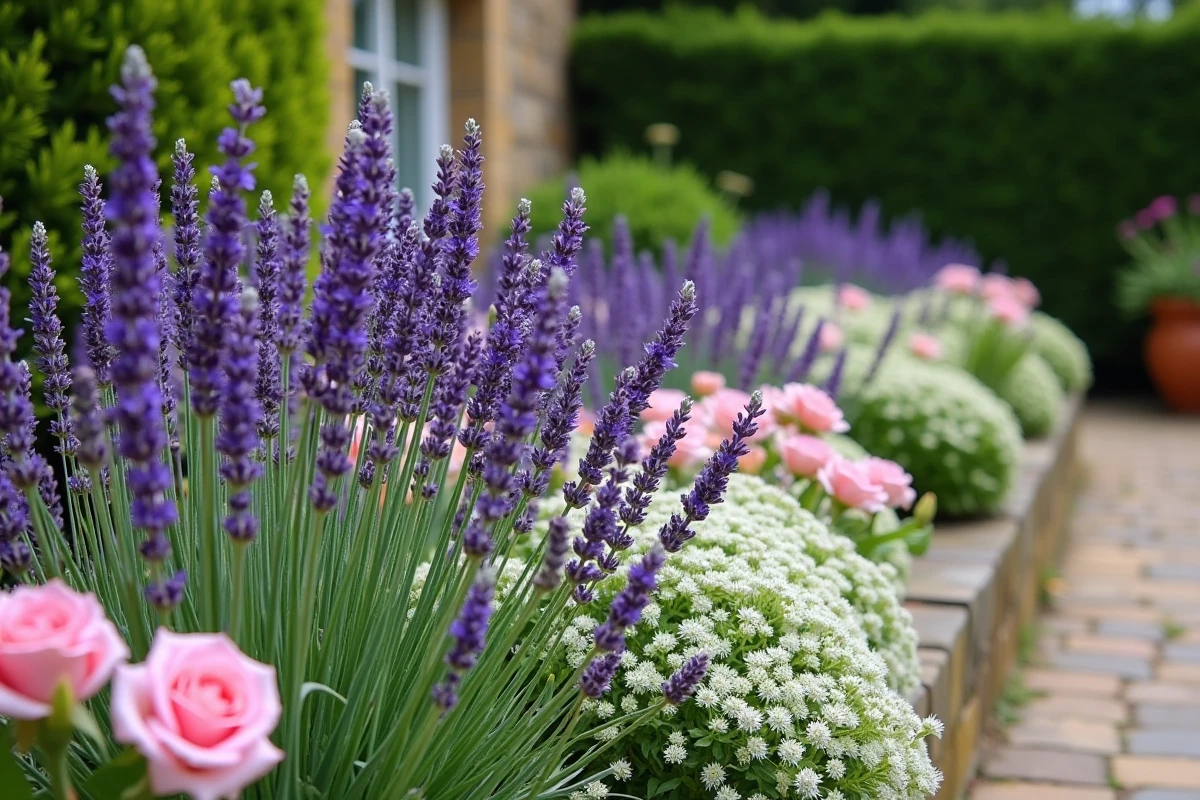
Lavender grows effortlessly in dry, poor soil, in full sun. However, pairing lavender in a flower bed requires choosing neighbors that share these requirements. Planting a water-hungry perennial or a dense foliage that retains moisture at its base next to it will condemn it to wither within a few seasons.
Soil drainage before choosing plants: the foundation that failed flower beds neglect
Have you ever noticed that a magnificent lavender in a pot can wither once planted in the ground? The problem rarely comes from the cold. It comes from stagnant water around the roots.
Lavender tolerates low temperatures, but not a soil soaked with moisture in winter. In clay soil, the roots remain in a saturated layer for weeks. Gardeners in humid regions of northern France report a significant decline in the vigor of their lavenders planted in unamended clay soil.
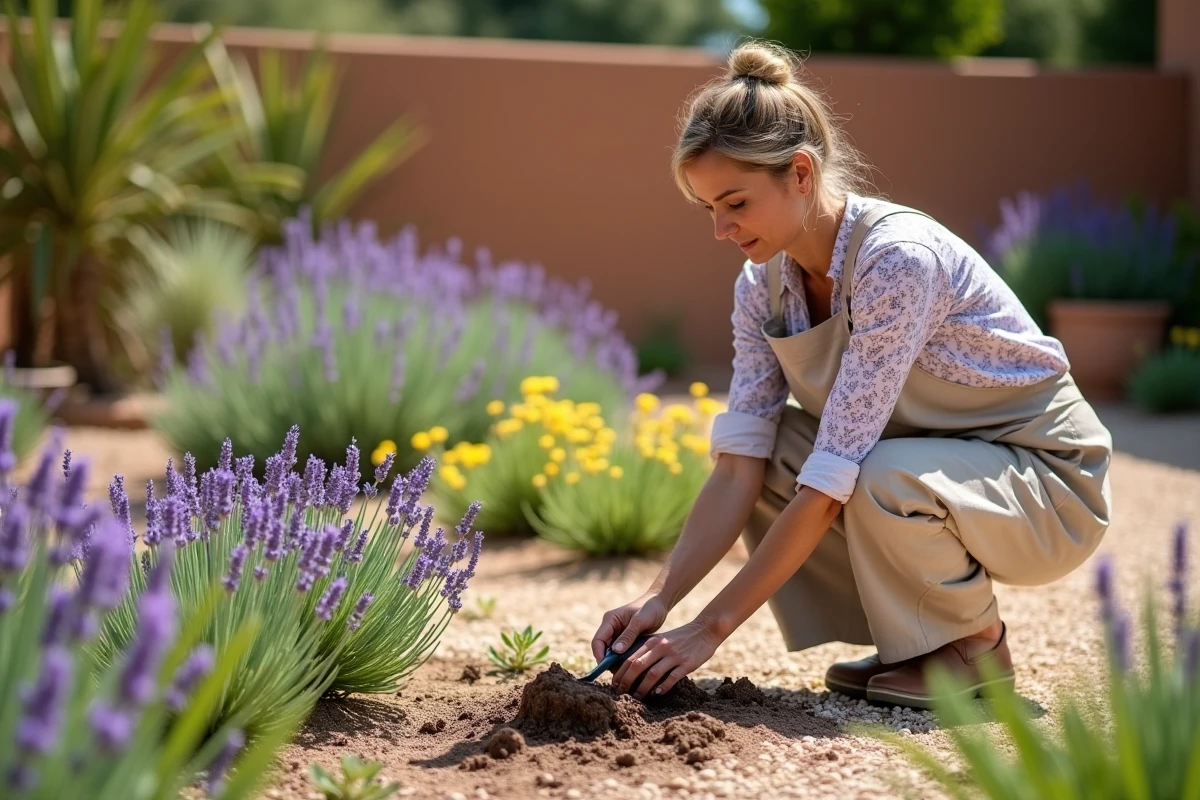
Before thinking about associations, the ground must be prepared. Incorporating draining gravel to a good depth in the planting hole changes the game. A mix of gravel, coarse sand, and garden soil creates the filtering substrate that lavender needs. If you want to pair lavender in a sustainable flower bed, this step conditions everything else.
Test your soil: dig a hole, fill it with water, and observe. If the water takes more than a few hours to disappear, the drainage is insufficient for lavender and most of its good companions.
Lavender and mild winters: adapting associations to climate change
Classic gardening guides recommend associations designed for cold, dry winters. The climate is changing. In many regions of France, winters are becoming milder and especially wetter, with prolonged periods without hard frost but with frequent rain.
This change directly affects lavender. A mild, wet winter promotes root rot much more than a cold, dry winter. Neighboring plants play a role: a companion with sprawling foliage that retains moisture in the soil exacerbates the problem.
Companion plants that protect the base of lavender
The best neighbors in this context are those that allow air to circulate at soil level. Ornamental grasses (stipa, blue fescue) provide fine, airy foliage that does not trap water. Their upright or drooping habit creates movement without suffocating the lavender.
Mediterranean perennials share the same tolerance for drought and poor soil:
- Bush sage (Salvia officinalis or ornamental varieties): evergreen foliage, compact habit, complementary flowering in early summer
- Creeping rosemary at the edge of the bed: ground cover that allows the soil to breathe and does not compete with lavender in height
- Yarrow (Achillea): shallow roots, flat umbel flowering that contrasts well with lavender spikes, and remarkable resistance to dry soils
- Perovskia (Russian sage): airy habit, prolonged blue-purple flowering, perfectly suited to hot summers and wet winters
Avoid dense ground cover plants like ivy or sprawling geraniums directly at the base of lavender. They maintain constant moisture that becomes fatal during mild winters.
Flowering and foliage: creating a lavender bed that remains beautiful all year round
Lavender blooms between June and August depending on the varieties. For the rest of the year, its gray-green foliage remains present but discreet. A successful flower bed anticipates flowering relays and texture contrasts for each season.
Layering heights and textures
Place lavender in the middle of the bed or in the foreground depending on its size. Varieties of Lavandula angustifolia remain compact, while lavandin (Lavandula x intermedia) can reach a good height.
Alternating fine foliage and broad foliage creates visual depth. Lavender provides fine, silvery texture. Pair it with a plant with broader, matte foliage (like woolly deadnettle or certain sages) so that each highlights the other.
Flowering relays season by season
For a flowering bed from spring to autumn, consider three tiers of flowering:
- Spring: light bulbs like alliums, planted between the lavender plants, bloom before it without hindering it
- Summer: lavender takes over with sages and perovskia for an intense blue-purple bed
- Autumn: grasses take on golden hues, sedums bloom in pink, and the evergreen foliage of lavender structures the bed when the perennials retreat
Planting mistakes that suffocate lavender in a flower bed
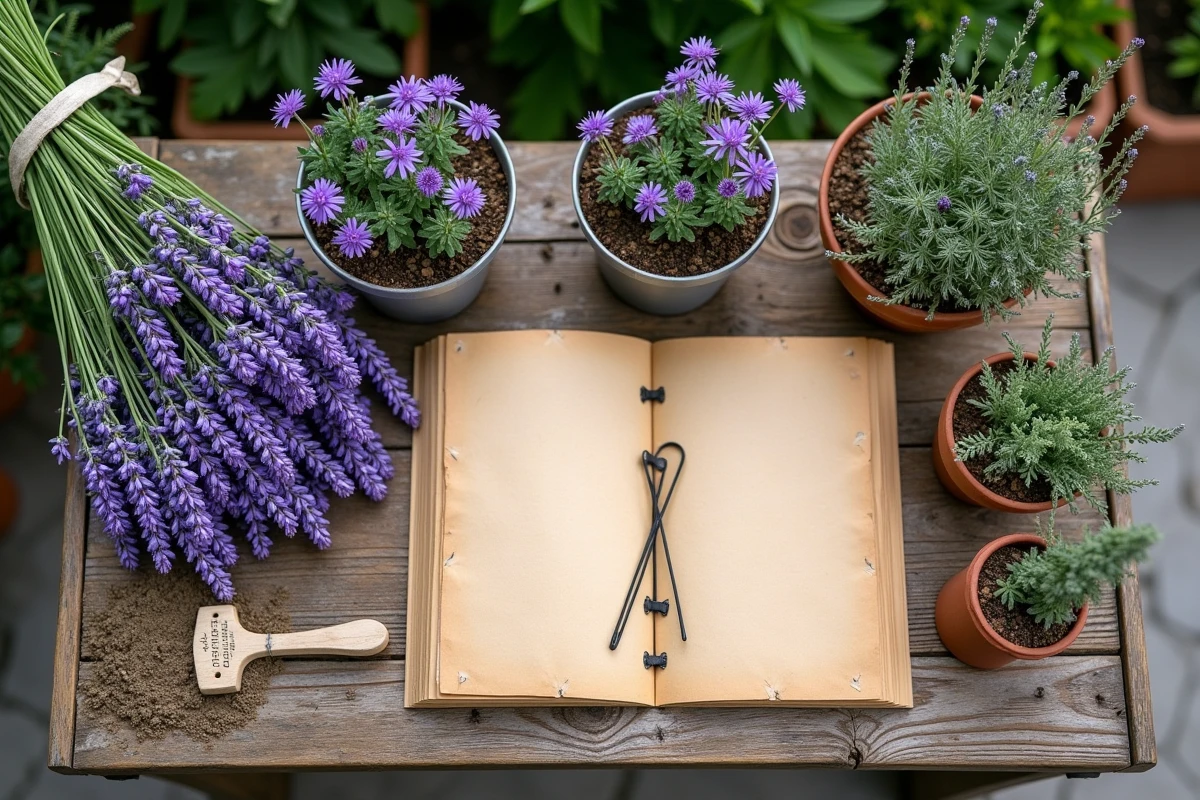
The most common mistake is crowding the plants. Lavender needs space for air to circulate around its foliage. Leave at least the adult width of the plant between two plants. In a mixed bed, allow a generous distance between lavender and its neighbors.
Another common trap: thick organic mulching (bark, straw). This type of mulching retains moisture at the collar, exactly where lavender cannot tolerate it. Prefer a mineral mulch (gravel, pumice) that keeps the base dry and recalls the limestone soils of Provence.
Do not fertilize lavender. A rich soil produces abundant foliage but weak flowering, and the plant becomes more vulnerable to diseases. Its ideal companions share this frugality: sages, grasses, and yarrow are content with poor soil.
A well-thought-out lavender bed rests on three simple choices: well-draining soil, water-sober neighbors, and enough space for each plant to breathe. With the climate evolving towards wetter winters, these principles become even more crucial for keeping lavenders vigorous year after year in your garden.