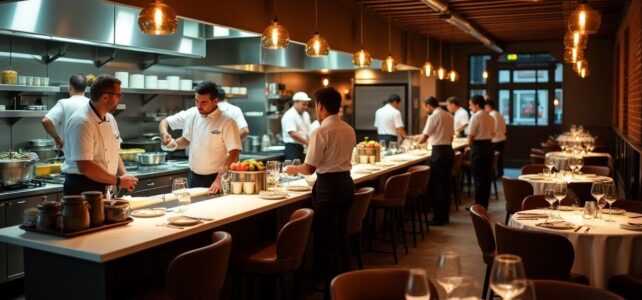
Equipping a restaurant establishment represents a major strategic challenge for any entrepreneur in the gastronomy field. The choices made in advance condition not only operational efficiency but also the quality of service offered to customers. In such a competitive environment, every detail matters. From kitchen equipment to serving utensils and furniture, each element must be carefully selected to meet the specific needs of the restaurant. The goal is to ensure an unforgettable dining experience for customers while optimizing internal operations.
A thoughtful and methodical approach is therefore necessary to build a quality infrastructure that will result in a harmonious and efficient operation of the establishment.
Essential Kitchen Equipment
The kitchen is the beating heart of any restaurant, and its layout must meet the ambitions of the establishment. The chosen equipment must be robust, reliable, and suited to the specific needs of the proposed menu.
- Cooking appliances: Stoves, ovens, grills, and fryers are essential for quality cooking. Their selection should be guided by the type of dishes offered.
- Preparation equipment: Choppers, mixers, and slicers facilitate work in the kitchen by optimizing the time and effort required for food preparation.
- Refrigeration systems: Preserving food items under optimal conditions is essential. Refrigerators, freezers, and cold rooms must be chosen with care.
- Kitchen utensils: Knives, pots, and other accessories are the daily tools of chefs. Their quality directly impacts the precision and efficiency of culinary operations.
Furniture and Decoration: Comfort and Aesthetics
Customers must feel comfortable as soon as they step through the door of a restaurant. The choice of furniture and decoration plays a crucial role in the customer experience, influencing their perception of quality and overall satisfaction.
A meticulous selection of tables and chairs is required, ensuring they are both comfortable and aesthetically pleasing. The arrangement of furniture should allow for smooth circulation while creating a welcoming environment.
Additionally, special attention should be paid to decorative elements such as lighting fixtures, artwork, and textiles. They should reflect the identity and concept of the restaurant, thus contributing to a unique and memorable atmosphere.
It is also important to integrate acoustic solutions to ensure a pleasant atmosphere where conversations can flow easily.
Dinnerware and Serving Accessories
Dinnerware and serving accessories are the showcases of culinary creations. Their selection influences the presentation of dishes and contributes to the visual and sensory experience of customers.
- Choose dinnerware that complements and enhances the aesthetics of the dishes. Plates, glasses, and cutlery should be in harmony with the gastronomic style.
- Serving accessories such as carafes, trays, and placemats should be functional and elegant, contributing to a smooth and pleasant service experience.
- Adopt innovative solutions for waste management, with discreet bins and integrated recycling systems in the service.
Technology and Security: Optimization and Protection
Technology plays a central role in the modern management of a restaurant. It optimizes operations while ensuring the safety of employees and customers.
The implementation of computerized management systems allows for the automation of ordering and payment processes, thereby improving the efficiency and accuracy of operations.
Particular attention should be given to the installation of security equipment, such as fire alarm systems, surveillance cameras, and alarms. They protect the establishment from risks and ensure a safe environment for all.
The choice of restaurant equipment should also include personal protective elements for staff, such as heat-resistant gloves and aprons.