Choosing your equipment before a first sports coaching session raises a rarely asked question: should you invest in versatile equipment or target accessories suited for a single type of training? The answer depends on the practice location, session format, and starting level. This article compares concrete options to avoid unnecessary purchases and start on a solid foundation.
Equipment Comparison by Practice Location: Gym, Home, or Outdoors
The choice of sports coaching equipment changes radically depending on whether sessions take place in a fitness center, at home, or outdoors. Here’s an overview of the major differences.
| Criteria | Gym | Home Training | Outdoor Coaching |
|---|---|---|---|
| Attire | Indoor shoes, breathable clothing | Comfortable attire, barefoot possible | Shoes with grip, adaptable layer |
| Priority Small Equipment | Towel, water bottle, weightlifting gloves | Non-slip mat, resistance bands | Resistance bands, jump rope |
| Large Equipment | Provided by the gym | Adjustable dumbbells, kettlebell | Not relevant (mobility) |
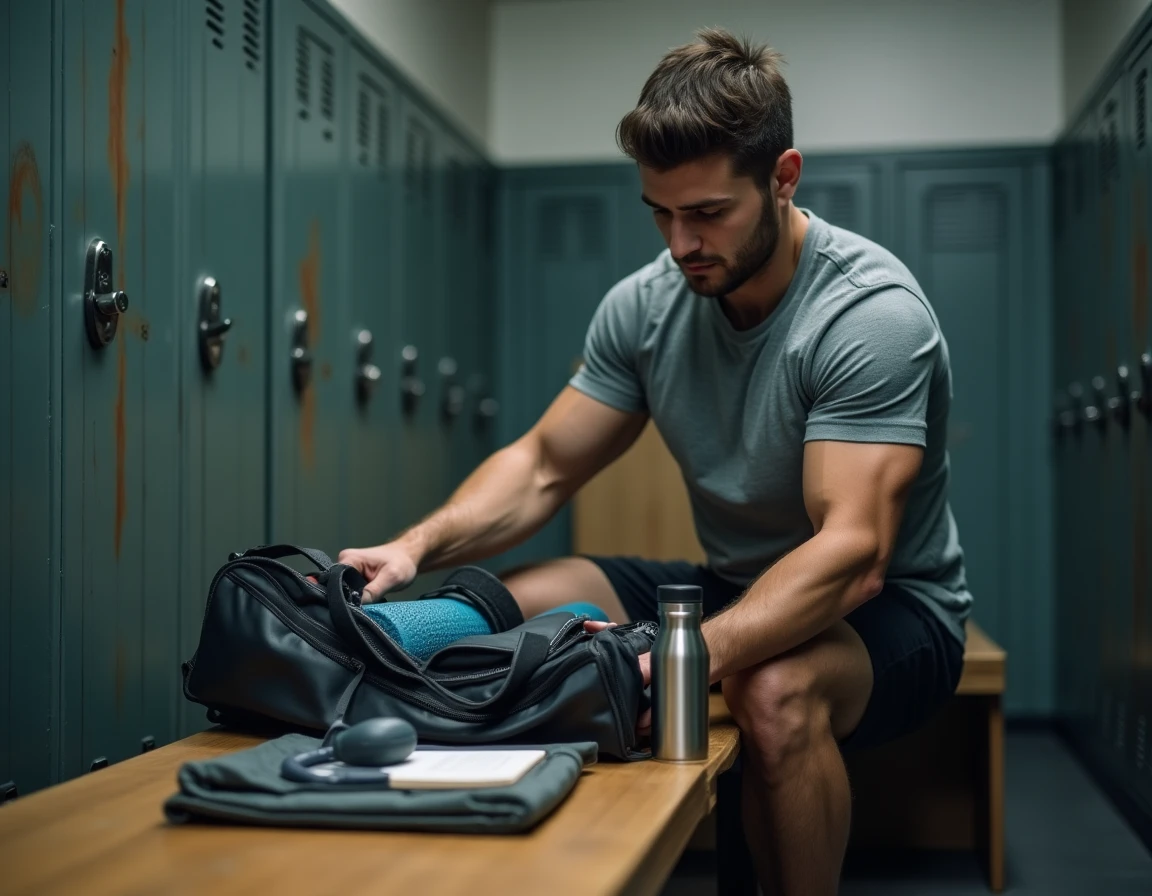
| Storage/Transport | Locker on-site | Dedicated space to plan | Compact sports bag |
| Starting Budget | The lowest | Moderate | Low to moderate |
Training in a fitness center requires the least personal equipment investment: machines and free weights are already available. In contrast, coaching at home requires building a basic kit that lasts.
For outdoor sessions, lightness is key. A coach or practitioner moving with a bag containing resistance bands, a foldable mat, and a jump rope already covers most strength and cardio exercises.
Shoes and Sports Attire: What Really Makes the Difference
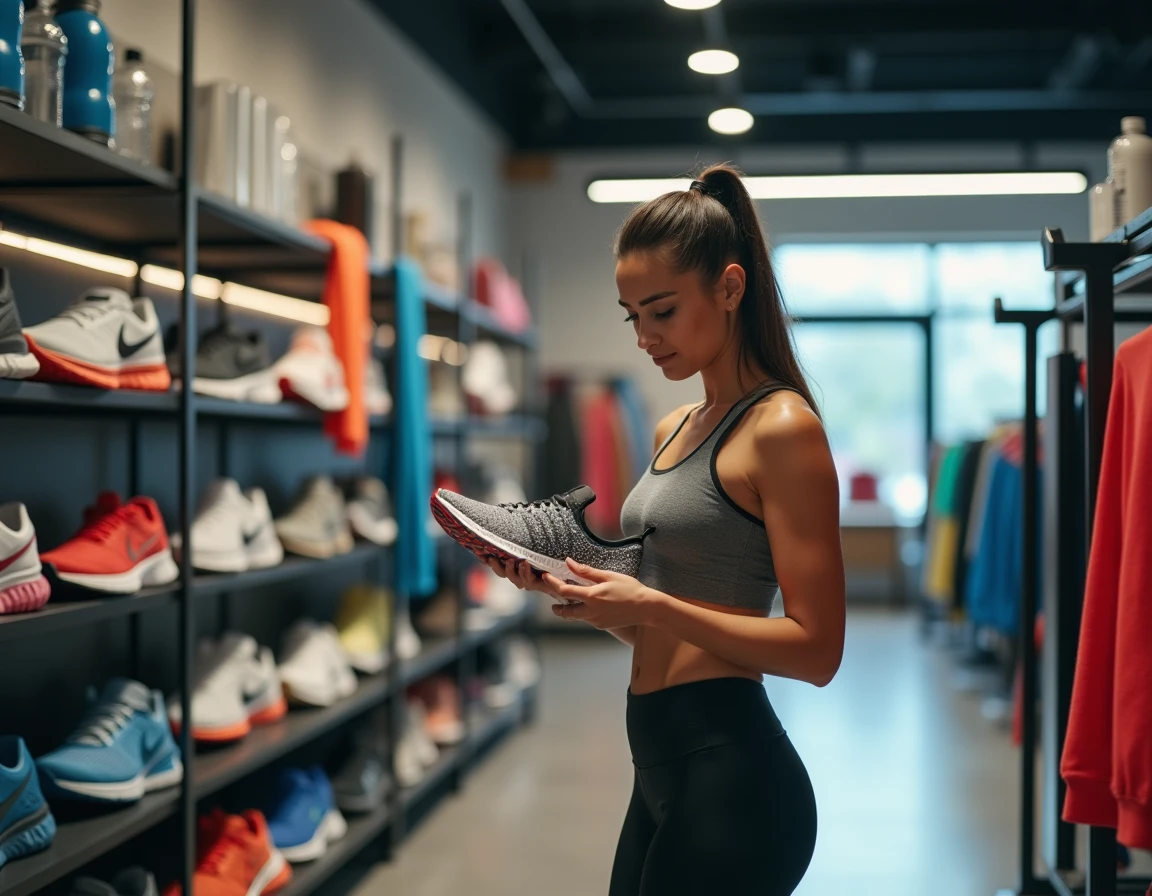
Attire may seem secondary, but it’s the equipment category that most influences comfort and injury prevention over time. Consulting the equipment recommended by Quel Coach, we see that shoes consistently top the priorities, regardless of the coaching type.
An unsuitable pair of shoes alters posture, overloads joints, and limits progress. For weightlifting in the gym, a flat and stable sole is preferable. For online coaching with dynamic exercises at home, a versatile training shoe (cross-training) offers a good compromise between cushioning and lateral support.
Running shoes are not suitable for strength training sessions: their thick cushioning destabilizes during squats and lunges. This is a common mistake among beginners who reuse their running sneakers.
On the clothing side, the technical criterion to remember is moisture management. Breathable synthetic materials wick away sweat, while cotton absorbs it and weighs down the garment. For women, a sports bra with support suited to the activity’s intensity is a priority purchase, not an optional accessory.
Resistance Bands, Kettlebells, or Dumbbells: Which Strength Equipment to Choose
Fitness equipment distributors have been offering minimalist “starter” packs designed for independent coaches and self-sufficient practitioners for a few years. This trend reflects a realization: it’s better to master three accessories than to have an unused collection.
Resistance bands offer the best versatility-to-bulk ratio. They allow for working all muscle groups, adapt to various difficulty levels, and fit in a pocket. Their limitation: they do not provide constant load throughout the range of motion, which reduces their effectiveness for developing maximum strength.
In contrast, kettlebells and dumbbells provide fixed and progressive resistance. A kettlebell between 8 and 16 kg covers a wide range of exercises (swings, goblet squats, Turkish get-ups). Adjustable dumbbells allow for increasing weight without multiplying weights.
- Resistance bands: ideal for home or outdoor coaching, lightweight, inexpensive, but limited for heavy lifting goals
- Kettlebells: versatile for functional strength, compact, but require a unit investment per weight increment
- Adjustable dumbbells: better weight progression, suitable for a dedicated home space, bulkier to transport
The choice depends on the session format and the practitioner’s goals, not on a universal ranking. A fitness program focused on cardio and toning effectively relies on bands. A strength training program aimed at building strength requires free weights.
Digital Equipment and Safety: Often Neglected Tools
Sports coaching equipment is not limited to physical gear. Planning and training tracking platforms have become an extension of the starter kit. Data from these platforms show a correlation between early use of tracking tools and better retention of first clients over the first six to twelve months.
For online coaching, a smartphone with a decent quality camera is sufficient to start. A stable tripod and natural lighting significantly improve the readability of exercise demonstrations without heavy investment.
On the safety side, professional organizations and specialized insurers report an increase in professional liability insurance subscriptions from the first year of activity. Some equipment is now considered de facto mandatory to limit risks:
- Non-slip mats compliant with current standards, to prevent slips during floor exercises
- Secure anchoring systems for bands, to prevent breaks and projections
- First aid kit compliant with sports medicine recommendations
An unregulated mat or a band without a reliable anchor point poses both legal and physical risks. Integrating these elements from the start avoids having to address a gap after an incident.
Sports coaching equipment deserves to be thought of as a coherent system, calibrated to the practice location and targeted goals. Field data converge on one point: a well-chosen, tight starter kit complemented by digital tools yields better results than a scattered investment in underutilized equipment.