
 For those who have patience and dedication, hedgehogs are great pets. Although they need space and a lot of attention, they are intelligent and curious animals that will provide companionship to those who know how to care for them. Here are some basic suggestions.
- Source — It is essential to research to find a good breeder from whom to buy the hedgehog; otherwise, you might end up with a grumpy animal that probably won’t live long. Avoid ads on online forums, as well as stores selling animals. Ensure that the breeder has a good reputation and don’t forget to check that the hedgehog is healthy before purchasing it.
- Remember that wild hedgehogs cannot be legally kept as they are state property. If you find a hedgehog, leave it where it is unless it is in imminent danger: close roads, downtown areas, harassed by other animals, or injured. In this case, pick it up and call the state forestry body.
 2
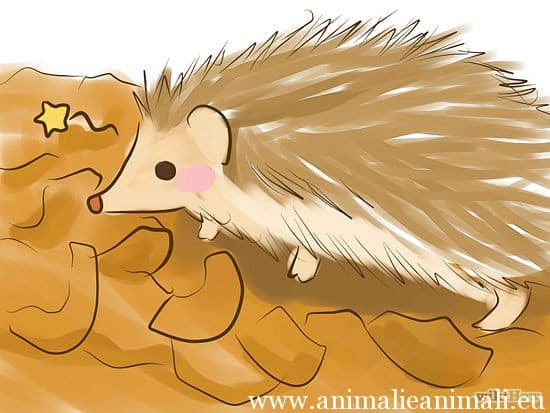
2 - Before bringing it home – Before buying, make sure you have everything you need to accommodate and raise your hedgehog. Do not suddenly change the food it eats. Inquire about the type of food the breeder gives it and continue following the same diet. When you bring the hedgehog home for the first time, leave it alone for the first 24 hours to give it time and peace of mind to explore its new home and get familiar with the new environment. It will take about a month to get used to your presence and the new smells. You will need to be patient
-
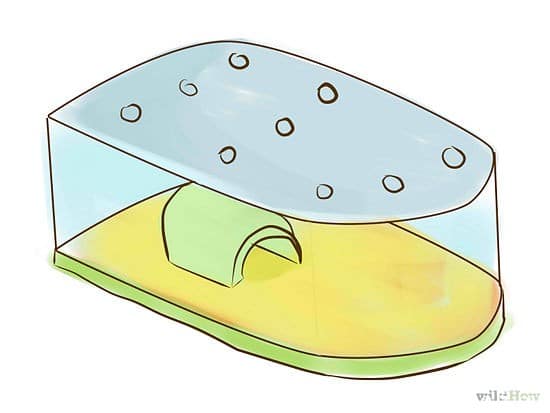
Appropriate location. 3 Hedgehogs need a very large cage to be comfortable. Therefore, their cage should be:
- Spacious: at least 45 cm x 60 cm with a solid base, or even better if larger as this will ensure enough room for them to stretch their legs and play. Cages should not have more than one level as hedgehogs do not have good eyesight and their feet are delicate and can be easily fractured. Equally dangerous are those grid cages they can climb. There should also be enough space for the food bowl, toys, and bedding.
- Well-ventilated: air must circulate freely, especially when the temperature in the room drops quickly (for example, during a power outage). In this case, you will need to cover the cage with a blanket.
- Safe: Hedgehogs are particularly good at escaping and love to climb. Make sure the cage is securely closed and that your hedgehog cannot climb out of the cage.
- Provide a hiding place: since the hedgehog is primarily a prey animal, it will need a hidden and dark area where it can rest away from prying eyes and annoying noises. An igloo kennel or a mini sleeping bag are ideal.
-
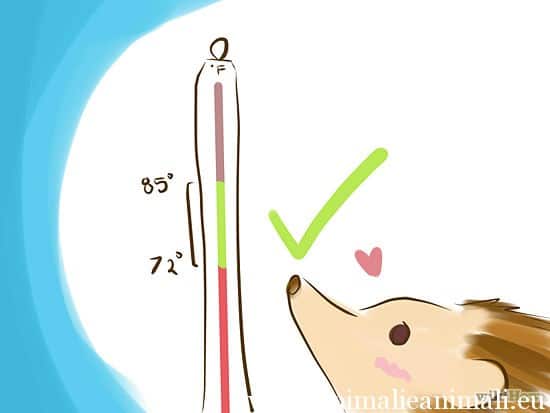
Maintain an appropriate temperature 4 – the ideal temperature for a hedgehog is between 21 and 29 degrees. If the temperature in your apartment is too low (below 21 degrees), the hedgehog will likely hibernate, which could be LETHAL; if it is too high, it could suffer from heatstroke. If it appears lethargic and stretches out its legs as if it is hot, or if its body temperature is cooler than usual, you will need to adjust the temperature of your room accordingly.
-
Choose quality bedding material. 5 Hedgehogs love wood shavings (see the Warnings section for more information) and fabric like sweatshirts. Choose a quality brand of shavings.
-
Avoid shavings that tend to get caught between the spines 6 . You can also use strips of newspaper, but be cautious of the dust content that would be created this way in the cage.
-
Pay attention to the hedgehog’s needs and behavior 7 .
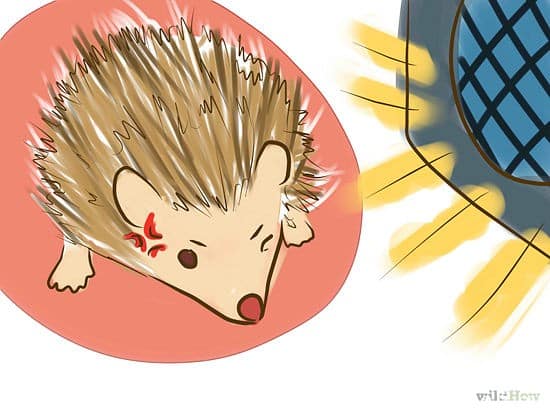
- Avoid noise. Do not place the hedgehog’s cage under stereo speakers or near the television. As prey in the wild, the hedgehog primarily relies on its sense of hearing: too much noise or commotion will be very stressful for it.
- Opportunity to move. Hedgehogs tend to gain weight easily, so the opportunity for physical activity is essential. They will need plenty of toys, including a wheel with a solid base. Those with grids or bars are dangerous because the hedgehog could get stuck, break its nails, or even fracture its feet. Any object that can be chewed, pushed, moved, and even turned can become a toy as these behaviors mimic their natural instinct in foraging for food. But be careful, it shouldn’t be too small to be swallowed.
- Closely monitor their behavior and how much they drink and eat. Hedgehogs are notoriously “good” at hiding their illness, so it is extremely necessary to be vigilant.
-
Provide appropriate food for your hedgehog. 8 Hedgehogs are primarily insectivores but enjoy fruits, vegetables, eggs, and meat. Since they tend to gain weight easily, be mindful of how much they eat to prevent them from becoming overweight. An overweight hedgehog cannot roll up, and any fat roll can prevent it from walking properly. Hedgehogs can eat:
- Mainly quality food. The precise dietary needs of hedgehogs are somewhat mysterious. Generally, you can give it quality dry cat food or specific hedgehog food. The kibble you choose should contain less than 12% fat and about 30% protein, and be organic. Avoid those that list by-products among the ingredients. The right portion is 1 or 2 tablespoons each evening at the same time, adjusting this amount based on the individual hedgehog’s weight. Try to vary their diet to avoid nutritional deficiencies, for example with fruits, vegetables, cooked chicken, and scrambled eggs. Important foods for the hedgehog’s diet include mealworms and silkworms. Crickets and moths can be served 1-4 times a week.
- NEVER give hedgehogs: nuts or seeds, dried fruits, raw meat, raw vegetables, hard sticky or stringy foods, avocado, grapes or raisins, Vitakraft for hedgehogs, milk, insects caught by you, alcohol, bread, fennel, raw or powdered onions, raw carrots, tomatoes, snacks such as chips, candy, anything filled with sugar or salt or honey.
- A hedgehog needs 70 to 100 calories per day, but most won’t say no to an extra snack.
- The bowl should be wide enough and heavy enough so that it cannot be tipped over (and start playing with it).
- Use a water bottle with a tube in the cage for better quality. This way, the shavings won’t end up in the water bowl, and the water won’t be accidentally spilled. More importantly, you will be able to see how much water is consumed.
-
place a litter box of the right size for your hedgehog 9 Make sure to use ONLY a non-clumping litter and clean it every day. Be cautious of any irregularities in your hedgehog’s bathroom habits that may indicate illness or stress.
-
The hedgehog cage should be cleaned regularly and thoroughly every 2 – 3 weeks 10 . The bowl and the water bottle tube should be washed daily with hot water.
-
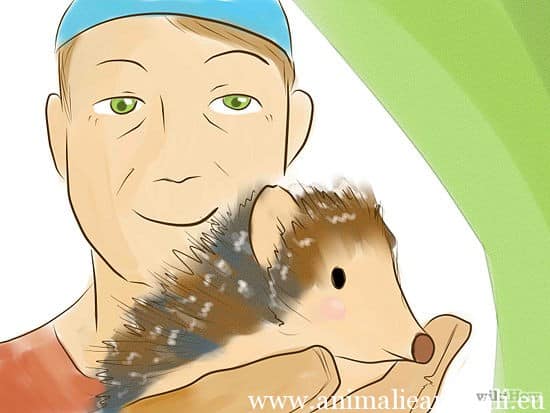
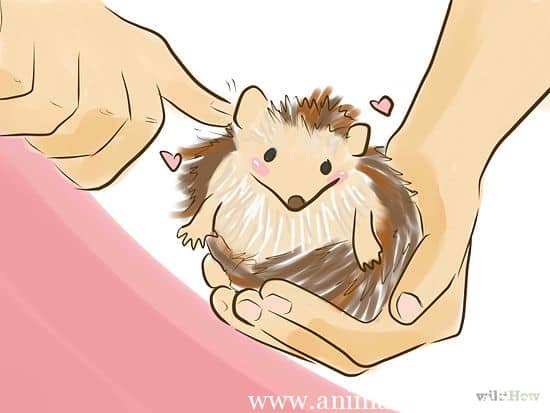
Handle the hedgehog gently in your hand 11 . The only way to get it used to your presence is to interact with it often. Always be gentle, make slow movements, and speak in a low voice. To have a well-socialized hedgehog, the general rule is to spend at least 30 minutes a day with it. When it comes out for the first time after hibernation, give it a few minutes to recover from the long sleep while holding it in the palm of your hand. When it is fully awake and active, then you can start interacting with it.
-
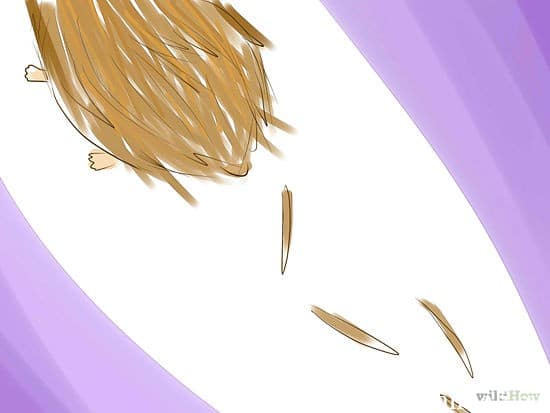
Be prepared for quill loss, a process similar to losing teeth in children that occurs for the first time between 6 and 8 weeks of life, and then again around 4 months when the immature quills are replaced by mature quills 12 . This process is completely normal, and you do not need to worry unless there are other signs of illness or discomfort, or if the quills are not growing back properly. During this time, it is possible for the hedgehog to be irritable and not like being touched. Don’t worry, it’s a transitional phase.
-
Dedicate time to play. 13 Feel free to play with your hedgehog. It will welcome your participation in play if you interact with it regularly.
-
Captive hedgehogs do not need to hibernate because they are mortal 14 . This can be avoided by maintaining an optimal temperature.
-
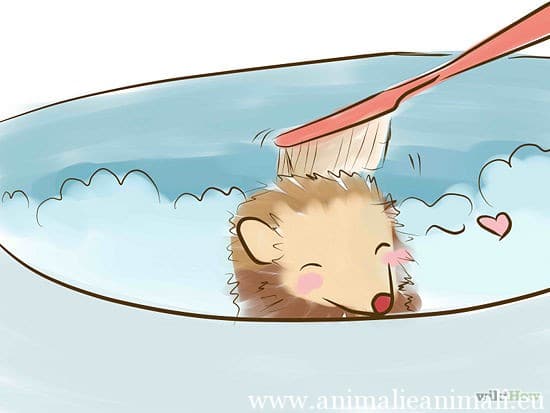
Cleaning 15 . At least once a month, you should bathe the hedgehog and trim its nails (depending on how fast they grow).
- Tips
 2
2 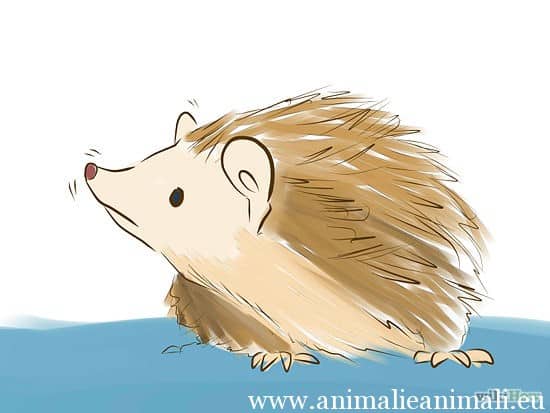

- If you want to have more than one hedgehog, it is advisable to keep them separate. Hedgehogs are solitary animals and prefer to be alone. If you keep them in the same cage, they will keep you up all night when they fight. Unless you want to buy a male and a female. Males can fight to the death.
- According to a strange law of nature, although they are not really able to give birth without problems until they reach 6 months of life, female hedgehogs can have babies as early as 8 weeks. Most importantly, they should not be bred within the same family. If the female is too young, she will not survive the pregnancy; if both parents are present, the young may be eaten.
-
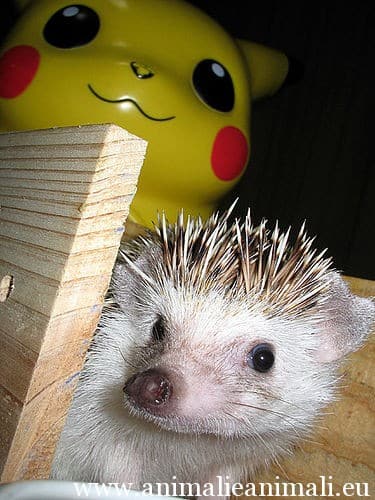
A simple piece of wood or an old toy may be enough to entertain your hedgehog
As toys for hedgehogs, you can use those for dogs such as rubber balls, cowhide bones, rubber toys, teething toys (like for children), etc. anything they can chew and ingest. Hedgehogs are NOT rodents, and encouraging them to chew will ruin their teeth, causing serious health problems that you will regret later. Make sure they do not swallow or get stuck with the toys you provide.
- If the temperature in your home is too cold, raise it using a ceramic heater or an electric stove, and if that doesn’t work, an electric blanket set to low. Do not use bulbs as they disrupt the night/day cycle for hedgehogs.
-
Warnings
- Caution: DO NOT use cedar wood shavings because mixed with the urine of hedgehogs can form toxic fumes. Even pine wood shavings that have not been improperly dried can create fumes when mixed with hedgehog urine. If the bag of shavings has a strong pine smell, it may not have been dried properly. Look for a packaging that smells more like wood than pine.
- Do not confuse normal quill loss with that caused by damage from parasites, infection, or poor diet. If in doubt, consult a veterinarian.
-
Is your hedgehog sleeping too much?
Do not let hedgehogs enter “semi-hibernation” — it is deadly for the pygmy hedgehog. The most common symptom is deep lethargy, and if the hedgehog is cold to the touch. If this happens, immediately remove the hedgehog from the cage and place it under your clothing or in contact with your body heat to warm it up. Continue to warm it using warm but not hot items, such as heating pads, a blanket covered electric blanket set to low, or a hot water bottle. If the hedgehog does not recover or does not seem active, contact a veterinarian immediately.
- Handle your hedgehog gently. Do not drop it, roll it when it arrives, pull it, or disturb it until it becomes irritable and aggressive.
- If you handle the hedgehog roughly and do not pay attention, it may bite you. It is an animal after all.
source: fr.wikihow.com

Tag : how to help a hedgehog