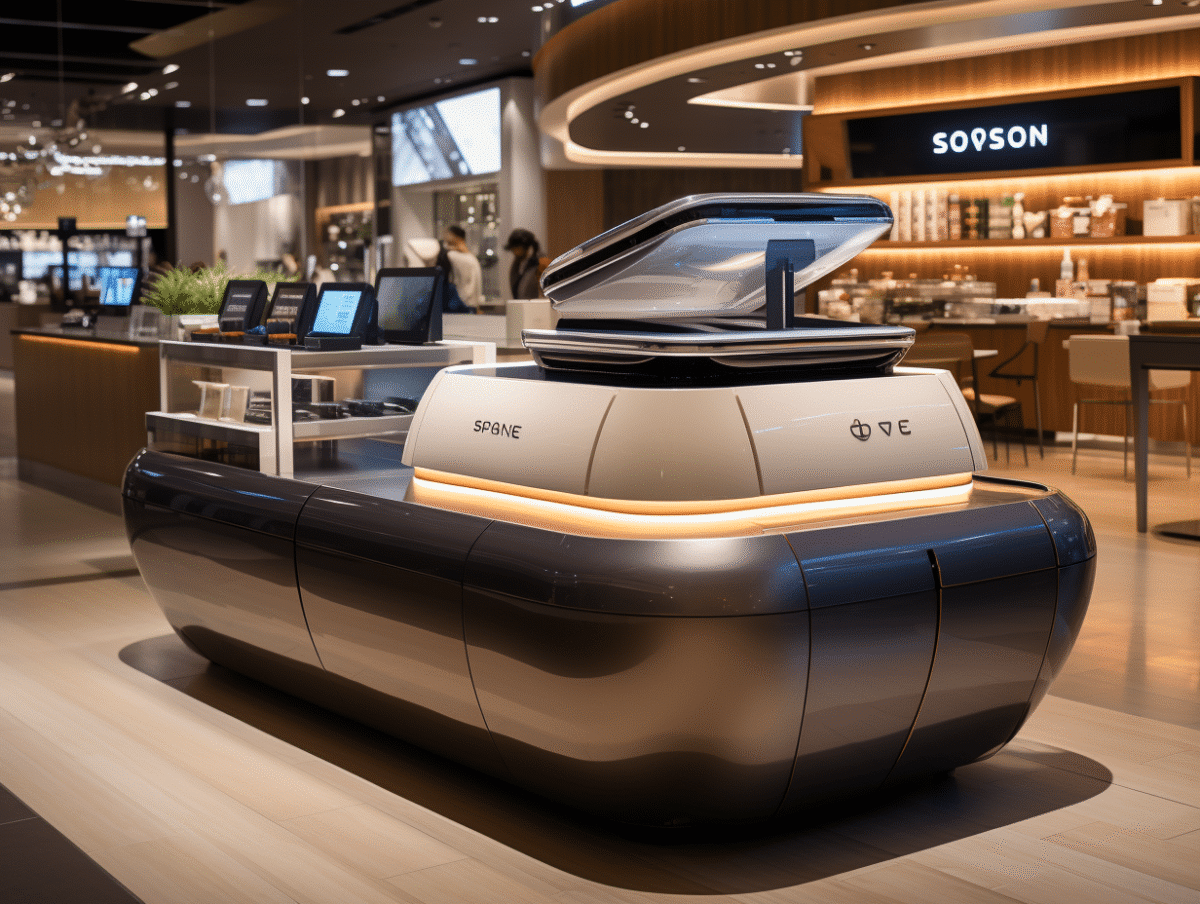
Automated commerce has made titanic strides thanks to digital revolutions and artificial intelligence. The latest trends show a preference for cashier-less shopping systems, like Amazon Go, where the user experience is free from queues. The rise of intelligent chatbots, capable of managing customer service with near-human skill, is redefining customer interaction. Mass personalization, driven by big data analytics, now allows companies to exceed consumer expectations. These advancements pave the way for a future where transactions are seamless, fast, and increasingly intuitive.
The Latest Innovations in Automated Commerce
In the automated commerce sector, technological advancements are surging at high speed. JD.com, a giant in e-commerce, has recently integrated drone delivery, pushing the boundaries of rapid distribution. Meanwhile, PepsiCo is stepping into the future with the deployment of delivery robots, sketching a new landscape for food product transportation. These initiatives reflect a frantic race for innovation that disrupts customer experience conventions and redefines industry standards.
Amazon’s Just Walk Out technology, for example, perfectly illustrates this relentless quest for fluidity in transactions. By eliminating the need to go through a checkout, Amazon offers a revolutionary shopping experience where cashier-less payment becomes the norm. Walmart, following suit, enhances the customer experience with an innovative voice ordering service, using Siri and Google Assistant to simplify shopping. Robotics and automation are thus becoming part of consumers’ daily lives, promising a future where efficiency reigns.
Beyond these striking examples, automated commerce is also embracing emerging technologies such as the Internet of Things and augmented reality. Applications like Wanna Kicks, which use augmented reality to offer a virtual try-on for sneakers, or IKEA, which allows customers to visualize furniture in their living space, push the boundaries of interaction and personalization. In this context, the emergence of ‘TradeGPT 360 Evex’, an automation platform for commerce, looms as a potential revolution, promising an unprecedented synergy between supply chain technology, the Internet of Things, and enhanced user experience.

Impact and Future of Automated Commerce
The commerce sector, revolutionized by relentless technological advancements, is facing profound changes that are reshaping its future. Innovations in supply chain management, driven by artificial intelligence and process automation, promise increased efficiency and reduced logistics costs. Mastering the supply chain, thanks to these technologies, becomes a strategic issue for companies. Retailers, on the lookout for these developments, scrutinize every change to maintain their competitiveness.
The Internet of Things, with an annual growth rate of 12.6%, is positioning itself as a catalyst for change in e-commerce. Its sensors, which facilitate real-time information sharing, pave the way for connected and proactive logistics. Sensor networks allow for precise data collection, fundamental for informed decision-making and digital marketing personalization. New technologies thus disrupt the interaction between customers and merchants, offering new business opportunities.
In the field of m-commerce, the trend is equally significant. Nowadays, mobile commerce accounts for 50% of global e-commerce revenue. This rise reflects the growing importance of the mobile user experience. Shopping platforms must be optimized for these devices, with intuitive interfaces and simplified payment processes to meet the demands of mobile consumers.
In response to these changes, training organizations like ICD offer programs tailored to the skills required by the market. These training courses, aimed at future sales professionals, integrate skills in digital marketing, data management, and predictive analytics, essential for navigating the complex landscape of automated commerce. Educational institutions thus play a key role in preparing a generation ready to drive the commerce of tomorrow, equipped with technological and strategic know-how.