
The product announcements of 2026 display technical sheets often similar to those of the previous year. Gains in raw performance are slowing down across several categories, from smartphones to laptops. What is progressing, however, are regulatory compliance, energy efficiency, and the ability of devices to work together. Measuring this shift helps to understand what the term “trend” really encompasses in high-tech this year.
European Compliance and AI Act: What Changes for Tech Products
The European regulatory framework, particularly the AI Act, alters the conditions for bringing products and services that incorporate artificial intelligence to market. Manufacturers must now document risks, limit certain uses of automated profiling, and ensure greater transparency regarding the functioning of embedded algorithms.
This constraint has a direct effect on marketing announcements. Vague promises like “integrated AI” are giving way to precise functional descriptions. A voice assistant or recommendation system must indicate what it collects, how it processes data, and in which risk category it falls.
For consumers, this translates into more readable product sheets and software updates that are more focused on compliance than on adding flashy features. The new offerings on the tech section on C Nouveau reflect this shift, where the value of a product is measured as much by its compliance as by its power.
Comparison Table: Tech Differentiation Criteria in 2025 and 2026
Buying criteria evolve from year to year. The table below contrasts the dominant communication axes in 2025 with those that structure the launches of 2026.
| Criterion | Trend 2025 | Trend 2026 |
|---|---|---|
| Raw Performance (CPU, GPU) | Main argument for launches | Marginal gains, communication refocused on efficiency per watt |
| Artificial Intelligence | Generic mention (“boosted by AI”) | Documented AI functions, compliant with the AI Act |
| Material Durability | Secondary, not prominently highlighted | Repairability index, software support duration |
| Interoperability | Dominance of closed ecosystems | Progress in open protocols (Matter, Thread) |
| Pricing Positioning | Ultra-premium as showcase | Rise of well-equipped mid-range segment |
Reading the table highlights a shift in perceived value. Sobriety and compliance replace the overemphasis on specifications as selling points.
Repairability and Energy Efficiency: The New Quality Markers
The repairability index, already displayed in France on several product categories, weighs more heavily in purchasing decisions. Brands that offer spare parts available for several years and public repair guides gain credibility.
The duration of software support becomes a major differentiation criterion. A smartphone guaranteed for several years of security updates presents a higher usage value than a more powerful model that is quickly abandoned by its manufacturer.
In terms of energy, recent processors prioritize efficiency per watt rather than maximum frequency. Laptop manufacturers communicate about real autonomy in everyday use, not just on benchmarks under laboratory conditions. This approach aligns with the expectations of buyers who use their devices on the go, far from a power outlet.
What This Means for the Consumer
- A mid-range product with a good repairability index and long software support can offer a lower total cost of ownership than a premium model.
- Accessories compatible with open standards (universal USB-C chargers, Matter home automation protocols) reduce dependence on a single manufacturer.
- “Accessible premium” is on the rise: well-equipped intermediate products are capturing an increasing share of sales against ultra-high-end models.
Home Automation Interoperability, Connected Health, and Mobility: The End of Silos
Competing content still treats home automation, connected health, and mobility as separate categories. Products launched in 2026 show a convergence of these uses within unified ecosystems.
The Matter protocol, supported by Apple, Google, and Amazon, allows objects from different manufacturers to communicate without a proprietary gateway. A connected lock, a thermostat, and a sleep tracking bracelet can now share common triggers. The isolated connected object is losing ground to products designed for an open ecosystem.
In connected health, recent watches and bracelets integrate sensors validated by medical organizations. Consumers are looking for wellness solutions with reliable measurements, not just gadgets displaying approximate data.
Electric Mobility and Embedded Connectivity
Recent electric vehicles come equipped with infotainment systems that communicate with home automation. The car becomes a node in the connected ecosystem, capable of preheating the home as one approaches or synchronizing a charging schedule with off-peak hours of the electrical grid.
This cross-functionality alters the framework for evaluating a trends section. Assessing a tech product in isolation loses relevance when its value depends on what it can interact with.
High-Tech Products 2026: Real Innovations or Maturity Growth
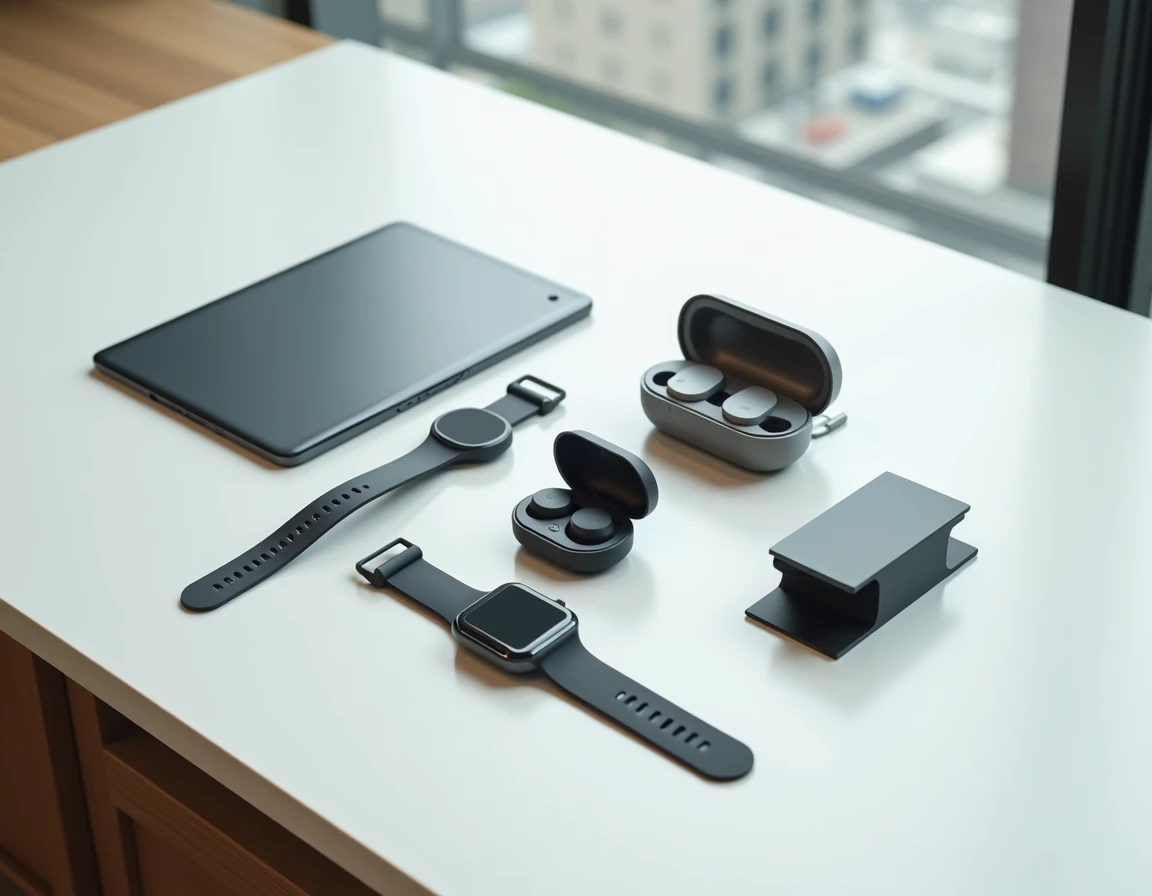
The launches of 2026 do not present a technological breakthrough comparable to the arrival of smartphones or consumer virtual reality. What is at play is rather a maturation process: better-documented products, more durable, more efficient, and designed to work with other devices seamlessly.
Innovation is shifting from specifications to real use. A device that lasts longer, complies with a readable regulatory framework, and integrates into an open ecosystem provides more daily value than a performance gain of a few percentage points on a benchmark.
The high-tech market is entering a phase where compliance, repairability, and interoperability are no longer secondary arguments. They are the criteria that separate a good product from one that is simply recent.