
Your lawn grows unevenly, the neighbor’s gas mower wakes up the whole neighborhood, and you wonder if an electric mower would solve the problem. The short answer: yes, as long as you choose a model suitable for your terrain. The best electric mower is not the most powerful or the most expensive; it is the one that matches the area, shape, and constraints of your garden.
Corded or battery: a matter of terrain, not budget
The first question to settle before any purchase concerns the power source. Corded mower or battery mower, the choice is not just a matter of comfort preference. It directly depends on the configuration of your lawn.
A corded mower remains plugged into an outlet via an extension cord. It operates without time limits, never loses power, and is cheaper to purchase. However, the cord limits the range of action and complicates mowing around flower beds, trees, or walls.
The cordless mower, powered by a rechargeable battery, offers total freedom of movement. You can mow an L-shaped garden, navigate around obstacles, and work far from the house. The downside: the battery life is limited and the purchase price is higher. To compare corded and cordless models based on your situation, the detailed sheets on tondeuse-electrique.net allow you to quickly visualize the differences in usage.
Have you noticed that some gardens have an outdoor outlet less than ten meters from the lawn? In this case, a corded mower is more than sufficient. If your terrain is larger or fragmented, the battery becomes a real time-saver.
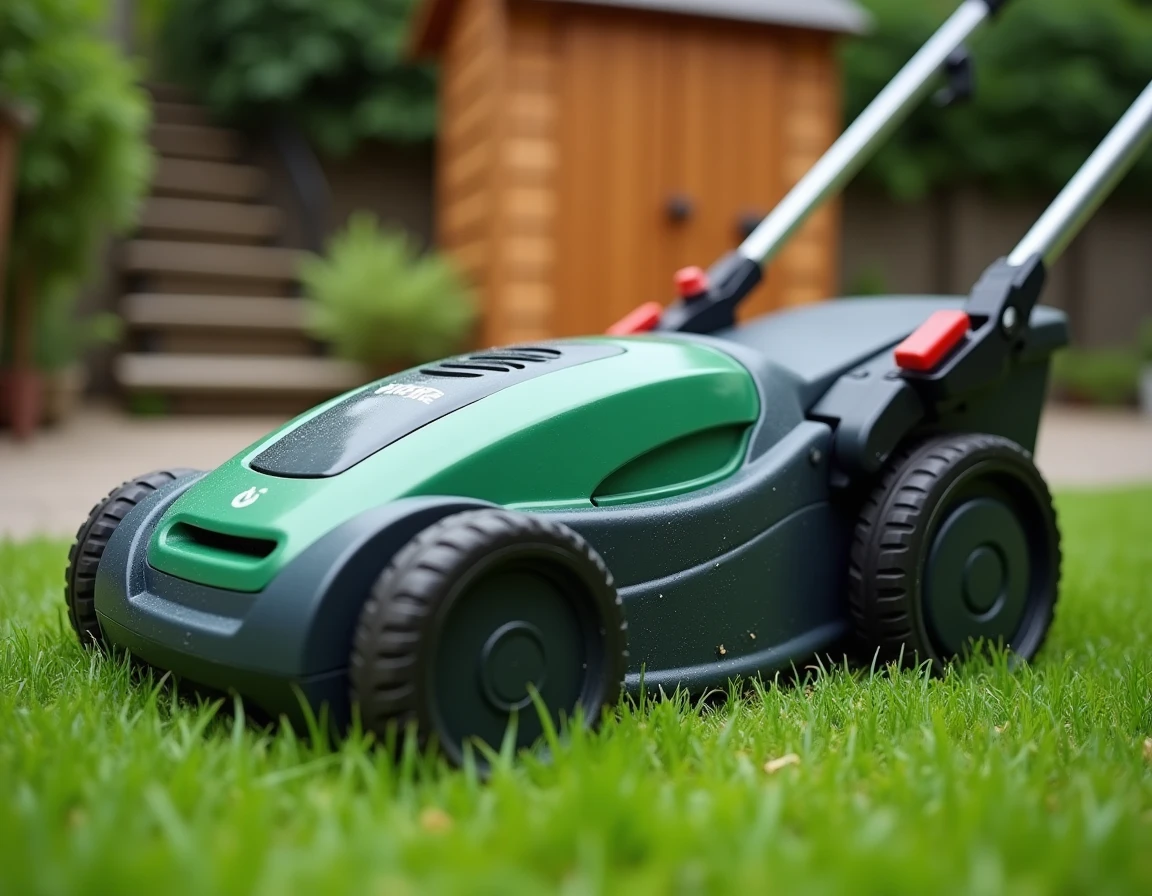
Motor power and cutting width: what changes mowing on a daily basis
The power of an electric mower is measured in watts for corded models and in volts for battery models. But this number alone does not tell the whole story. What matters is the match between power and the area to be mowed.
A corded mower intended for a small garden does not need an overly powerful motor. For a medium-sized area, higher power helps cut dense or wet grass without straining the motor. For battery mowers, the voltage (expressed in volts) combined with the capacity (in amp-hours) determines both the cutting force and the runtime.
Cutting width: a criterion that beginners underestimate
The cutting width corresponds to the strip of grass mowed in a single pass. The wider it is, the fewer back-and-forth movements you make. On a clear and rectangular terrain, a generous cutting width significantly reduces mowing time.
On a narrow, sloped, or cluttered garden with flower beds, a cutting width that is too large makes the mower difficult to maneuver. You lose precision for the speed you gain. The idea is to choose a width suited to the actual shape of the terrain, not its raw area.
Adjustable cutting height and grass collection bag: two details that change the result
Why does this choice of cutting height matter so much? Because mowing too short damages the grass and encourages weeds. A good setting allows you to cut at the upper third of the grass blade, which keeps the lawn dense and healthy.
Most electric mowers offer several height positions. Check that the adjustment system is centralized (one lever for all four wheels) rather than individual. Centralized adjustment saves time and ensures an even cut.
Bag, mulching, or side discharge
The grass collection bag collects the cut grass. Its capacity determines how often you need to empty it. In a small garden, a modest bag is sufficient. On a larger area, a bag that is too small turns mowing into a chore of emptying.
- The collection bag is suitable for ornamental lawns where an immediate clean finish is desired, without visible residues.
- Mulching finely chops the grass and redistributes it on the ground, which naturally nourishes the lawn and avoids managing green waste.
- Side discharge projects the grass to the side, practical for poorly maintained terrains or semi-wild areas, but leaves visible clumps.
Mulching deserves special attention. It works well when the lawn is mowed regularly. If the grass is tall, the clippings accumulate in clumps and smother the lawn.

Maintenance of the electric mower: extending the lifespan of the device
A point often overlooked in buying guides: the quality of the cut depends as much on maintenance as on the chosen model. A dull blade tears the grass blade instead of cutting it cleanly, which yellows the lawn and makes it vulnerable to diseases.
After each mowing, remove the grass clippings stuck under the deck. The accumulation of wet material causes corrosion and reduces cutting efficiency. A quick clean with a water jet (motor off and unplugged) is sufficient.
- Sharpen or replace the blade at least once per season, more often if you mow frequently.
- For a battery model, store the battery away from frost and excessive heat. A well-maintained battery retains its capacity longer.
- Regularly check the condition of the wheels and handle. A stuck wheel axle makes the mower difficult to push and unnecessarily wears out the motor.
These simple actions extend the lifespan of the device by several seasons and maintain a clean cut over time.
Electric mowers and robotic mowers: an increasingly blurred line
Robotic mowers also run on electricity, but their logic is radically different. They mow on their own, autonomously, according to a programmed schedule. Recent models use mapping technologies (a combination of satellite positioning and visual sensors) that eliminate the boundary wire once necessary to define the mowing area.
This evolution blurs the line between traditional electric mowers and robots. For a modest-sized garden without complex obstacles, a robot can completely replace a push mower. For sloped, uneven, or heavily wooded terrain, the traditional mower remains more reliable and precise.
The choice between the two depends less on budget than on the balance between available time and result requirements. If you enjoy controlling the height and appearance of your lawn, a manual mower remains the best tool. If you prefer not to think about it anymore, the robot takes over.